Ganesh Chaturthi: Meaning, Traditions, Rituals and How It Is Celebrated

Ganesh Chaturthi is one of those festivals that instantly brings a sense of warmth, devotion and togetherness into the home.

Dedicated to Lord Ganesha, the beloved deity of wisdom, prosperity and new beginnings, the festival is celebrated with prayers, flowers, sweets, decorations and family gatherings. But beyond the rituals and festive atmosphere, Ganesh Chaturthi carries a simple and meaningful message — begin with faith, face challenges with wisdom and move forward with a positive heart.

For many families, it is also a time to reconnect with traditions, involve children in rituals and create memories that are passed from one generation to the next.

What Is Ganesh Chaturthi?

Ganesh Chaturthi is a festival dedicated to Lord Ganesha, also known as Ganapati, Vinayaka, Pillaiyar and Vighneshwara. Lord Ganesha is traditionally worshipped before starting something new, whether it is a journey, a business, a ceremony or an important personal milestone. He is often called Vighnaharta, meaning the remover of obstacles.

During Ganesh Chaturthi, families welcome Lord Ganesha into their homes by placing an idol in a specially prepared prayer area. The space may be simple or elaborately decorated depending on the family's traditions. Over the course of the celebration, devotees offer prayers, flowers, sweets and homemade food, while spending time together in a peaceful and devotional atmosphere.

Every family may celebrate a little differently, and that is part of what makes the festival special.

The Meaning Behind Lord Ganesha

Lord Ganesha's appearance is full of symbolism, and many of his features are connected with qualities that are valued in everyday life. His elephant head is associated with wisdom and intelligence. His large ears remind us to listen carefully, while his small eyes are often seen as a symbol of focus and concentration. The trunk represents strength and adaptability. It is powerful enough to move heavy objects, yet gentle enough to perform delicate tasks. Lord Ganesha's large belly is often associated with the ability to accept both the good and difficult experiences of life with calmness.

                                                           Hand-painted Ganesha Idol 6*8 inches.

His vehicle, the mouse or Mushika, also carries meaning. It is sometimes seen as a symbol of desire. Lord Ganesha sitting above the mouse represents the idea that desires should be controlled rather than allowed to control us. These symbols make Lord Ganesha much more than a deity associated with good fortune. He also represents patience, balance, wisdom and thoughtful action.

How Is Ganesh Chaturthi Celebrated at Home?

For many families, preparations begin by cleaning the home and setting aside a special place for Lord Ganesha. The prayer area may be decorated with flowers, lamps, rangoli, fabric, torans and traditional décor.

A Ganesha idol is then placed in the prepared space, and the family gathers for prayer. Lamps and incense may be lit, and offerings such as flowers, fruits and sweets are arranged in front of the idol. Some families chant mantras, some sing bhajans, while others perform aarti together.

One of the most familiar chants heard during the festival is:

Ganapati Bappa Morya

The rituals can be simple or detailed depending on family traditions. In some homes, prayers are performed once a day. In others, the family gathers several times for worship, devotional songs and offerings. There is no single correct way to celebrate. What matters most is the devotion and intention behind it.

Traditional Offerings to Lord Ganesha

Food plays an important role in Ganesh Chaturthi celebrations.

One of the best-known offerings is modak, a sweet that is traditionally associated with Lord Ganesha. In South Indian homes, similar preparations are often called kozhukattai or modakam. These sweets are commonly made using rice flour, coconut and jaggery, although recipes vary from family to family.

Other offerings may include fresh fruits, coconut, flowers, durva grass, betel leaves, nuts and homemade vegetarian dishes. After the prayers, the food offered to Lord Ganesha is shared as prasadam. For many families, preparing these dishes is just as meaningful as offering them. Parents and grandparents often teach younger family members how to make traditional recipes, helping keep family customs alive.

Decorating for Ganesh Chaturthi

Decorating the prayer space is one of the most enjoyable parts of the celebration.

Some homes may have a large and colourful setup, while others prefer something simple with just flowers, lamps and a traditional backdrop. Fresh flowers are commonly used around the Ganesha idol and prayer area. Rangoli or kolam designs may also be created near the entrance or around the pooja space as a symbol of welcome and positivity. Lamps or diyas are usually lit during prayers. Light has always held an important place in Hindu traditions and is often associated with knowledge, hope and the removal of darkness.
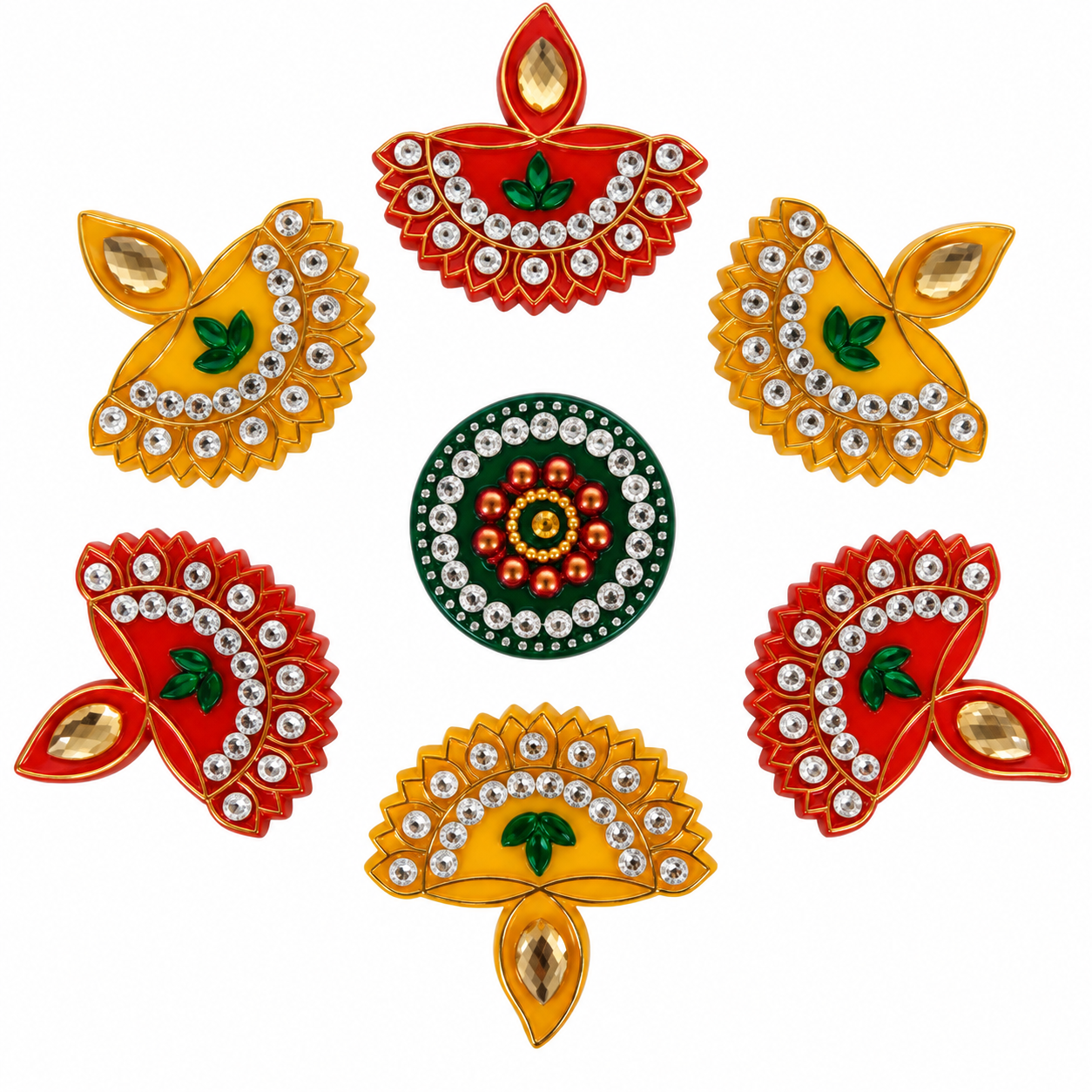
A 7-piece handcrafted acrylic kundan rangoli set featuring red and yellow diya-shaped pieces adorned with decorative jewel stones and a central circular motif.                                                                Yellow and Red pompom flower rangoli mat with diya holders.

Torans and decorative hangings may be placed near entrances to add a festive touch. Many families now also reuse decorations from year to year, combining traditional pieces with simple modern décor. Ultimately, the purpose of the decoration is not to make the space grand, but to create a peaceful and welcoming place for prayer.

Celebrating in an Eco-Friendly Way

In recent years, many families have become more conscious of how festivals affect the environment. One of the easiest ways to celebrate responsibly is by choosing an eco-friendly Ganesha idol. Traditional clay idols are a popular choice because they are made from natural materials and can dissolve more easily in water. Families can also reduce waste by reusing decorations instead of buying single-use plastic items every year.
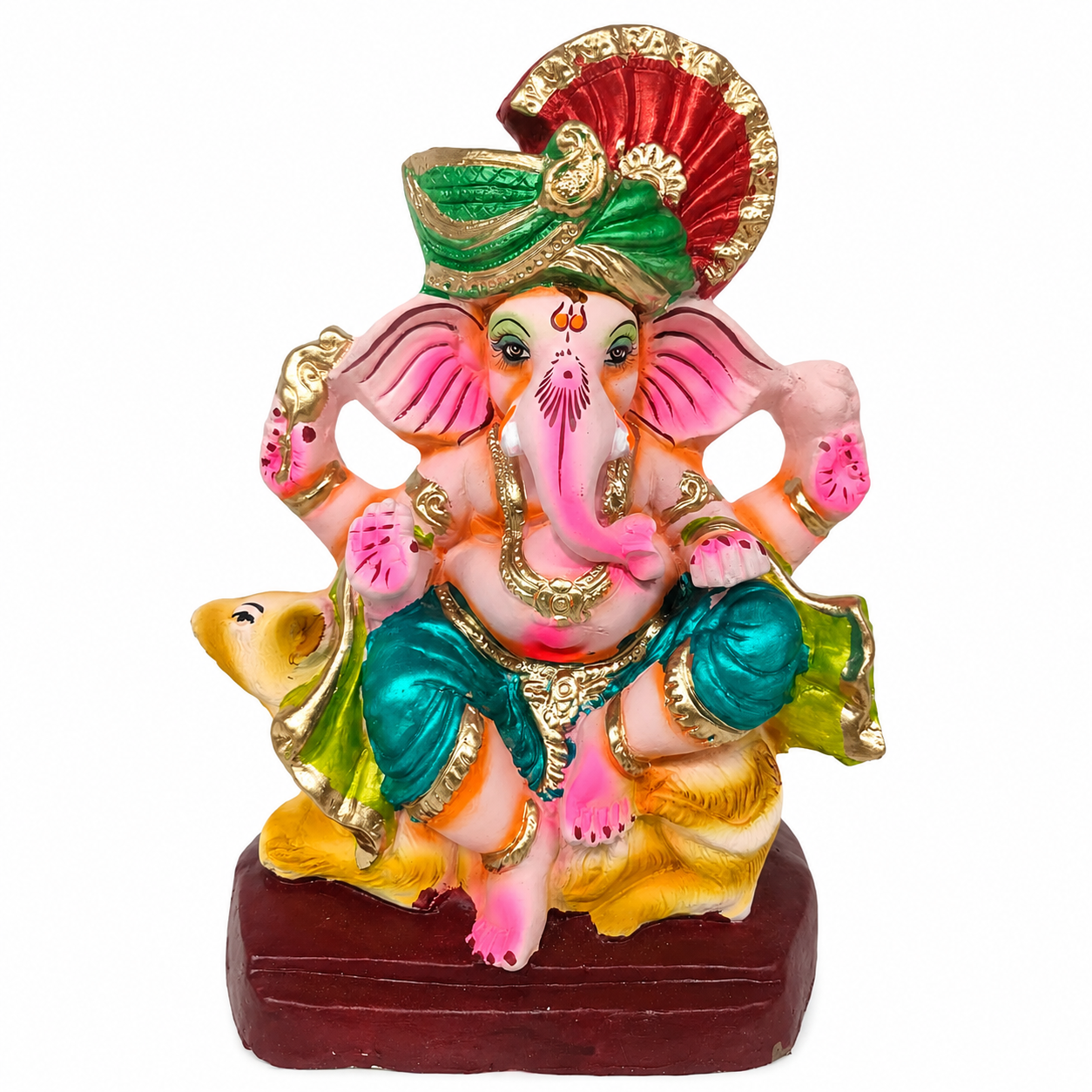
Colourful Ganesha Idol                                                            Colourful Ganesha Idol

Fabric decorations, wooden accessories, metal lamps, reusable rangoli pieces and artificial flower garlands can all be stored and used again. Natural flowers and simple handmade décor are also good options. Another important step is avoiding unnecessary waste. A beautiful celebration does not need excessive decoration. A simple prayer space with a few meaningful elements can be just as special. Celebrating thoughtfully allows families to honour tradition while also caring for the environment.

What Is Ganesh Visarjan?

Ganesh Visarjan marks the farewell to Lord Ganesha at the end of the celebration. Traditionally, the idol is immersed in water while devotees offer prayers and chant devotional phrases. The moment can feel emotional because the family is saying goodbye after welcoming Lord Ganesha into the home. At the same time, it is also a joyful occasion. Devotees thank Lord Ganesha for his blessings and pray for his return again.

The immersion also carries a deeper meaning. It represents the temporary nature of physical forms and the belief that spiritual presence continues beyond them. Today, many families choose more eco-friendly ways to perform Visarjan. Small clay idols may be immersed at home in a container of water, while some communities provide designated immersion areas.

The method may change, but the meaning remains the same — gratitude, farewell and faith.

Ganesh Chaturthi Around the World

Ganesh Chaturthi is celebrated not only in India but also by Hindu communities across many parts of the world.

Families living abroad continue traditions such as bringing home Ganesha idols, preparing sweets, visiting temples and performing pooja together. Temples and cultural organisations may also organise special prayers, devotional programmes and community gatherings.

In multicultural places such as Singapore, Ganesh Chaturthi can also become an opportunity for people from different backgrounds to learn more about Hindu traditions and Indian culture. The style of celebration may vary from place to place, but the spirit of the festival remains familiar — devotion, family, gratitude and new beginnings.

The Deeper Message of Ganesh Chaturthi

Ganesh Chaturthi is not only about rituals, food or decorations. At its heart, the festival reminds us of values that are useful in everyday life. Lord Ganesha encourages us to listen carefully, think before we act and remain patient when faced with difficulties. His symbolism reminds us that obstacles are part of life, but they do not have to stop us from moving forward.

The festival is also a time for gratitude. Families come together, cook, pray, decorate and spend time with one another. Children learn about traditions by watching and taking part, while adults often find a moment to slow down and reconnect with faith and family. In that sense, Ganesh Chaturthi is as much about reflection as it is about celebration.

Celebrating with Simplicity and Devotion

There is no perfect way to celebrate Ganesh Chaturthi.

Some families may create elaborate decorations and organise detailed rituals, while others may keep things very simple with a small idol, a lamp, flowers and homemade offerings. Both can be equally meaningful. What truly matters is the intention behind the celebration.

A peaceful prayer, time spent with family and gratitude for life's blessings can make the occasion special. Whether celebrated quietly at home or as part of a larger community, Ganesh Chaturthi continues to bring people together through faith, tradition and shared joy.

Ganapati Bappa Morya!

If you are preparing for a home celebration in Singapore, Adoura Gifts offers a small selection of Ganesha idols, pooja essentials and festive décor to complement traditional celebrations.

Traditional to Trendy: Rakhi Designs for Brother

A thread tied around the wrist can carry years of memories, affection and tradition. That is what makes Rakhi so meaningful.

For generations, Raksha Bandhan has brought brothers and sisters together through a simple ritual, tying a Rakhi, exchanging blessings and celebrating the bond they share. While the sentiment behind the tradition remains unchanged, the Rakhi itself has evolved considerably.

Today, Rakhi designs range from traditional threads and Rudraksha beads to Ganesha and Krishna motifs, decorative designer styles, colourful kids' Rakhis and coordinated Bhaiya-Bhabhi Lumba sets.

For Indian families living in Singapore, this variety makes it possible to preserve a familiar tradition while choosing a Rakhi that reflects a brother's age, personality and individual taste.

Before exploring the different Rakhi designs available today, let's look at what Raksha Bandhan means and why the tradition of tying a Rakhi holds such significance.

What Is Raksha Bandhan?

Raksha Bandhan is a Hindu festival that celebrates the bond between brothers and sisters and, more broadly, the affection, care and responsibility shared between siblings.

The meaning can be understood through the name itself. "Raksha" means protection, while "Bandhan" means bond or tie. Raksha Bandhan therefore represents a bond of protection and care.

At the heart of the celebration is the Rakhi ceremony.

Traditionally, a sister ties a sacred thread, or Rakhi, around her brother's wrist while wishing and praying for his health, happiness and well-being. The brother, in turn, acknowledges the bond and traditionally promises to support and protect his sister.

Families may also exchange sweets and gifts and seek the blessings of elders as part of the celebration.

Today, many siblings see the meaning of Raksha Bandhan as mutual rather than one-sided. It is an occasion to acknowledge the support, affection and companionship that brothers and sisters offer each other throughout their lives.

The History and Stories Behind Raksha Bandhan

Raksha Bandhan is associated with several stories from Indian mythology and tradition rather than one single origin story. Across these accounts, a recurring idea is that a sacred thread or gesture can represent protection, affection and responsibility.

One of the most widely told stories is associated with Lord Krishna and Draupadi. According to popular tradition, when Krishna injured his finger, Draupadi tore a piece of cloth from her garment and tied it around his wound. Touched by the gesture, Krishna is said to have pledged to protect her.

Another traditional account involves Indra and Indrani. During a difficult battle, Indrani is said to have tied a sacred protective thread around Indra's wrist after it had been blessed, symbolising protection and good fortune.

Different regions and communities have their own stories and customs connected with Raksha Bandhan. While the details vary, the idea of a protective bond runs through many of these traditions.

Over time, the tying of Rakhi became closely associated with the relationship between brothers and sisters and developed into the Raksha Bandhan celebration familiar to families today.

Why Is Rakhi Tied? The Meaning Behind the Sacred Thread

The Rakhi is more than a festive wrist accessory.

Traditionally, tying the sacred thread represents a sister's prayers and good wishes for her brother's well-being. The brother, in turn, acknowledges their relationship and the responsibility to care for and support his sister.

This is also why choosing a Rakhi can feel surprisingly personal.

Some sisters prefer a simple traditional Rakhi because it keeps the focus on the ritual itself. Others choose spiritual motifs such as Ganesha or Krishna because of their significance. A younger brother may be delighted by a colourful character or vehicle Rakhi, while a married brother may be celebrated together with his wife through a Bhaiya-Bhabhi Rakhi and Lumba set.

The designs may have changed considerably over time, but the sentiment represented by the thread remains.

From Traditional Threads to Today's Rakhi Designs

Today's Rakhi designs reflect both tradition and changing tastes.

Sacred threads, beads and spiritual symbols continue to be popular, while contemporary Rakhis incorporate decorative stones, floral elements, playful characters and modern motifs.

That means choosing a Rakhi for your brother no longer has to be about finding the most elaborate design. It can instead be about finding one that suits him.

Does he appreciate traditional Indian designs? Is he spiritually inclined? Does he prefer understated accessories or something more decorative? Or are you choosing for a younger brother who would be much happier seeing a colourful character or Jeep on his wrist?

Here are some of the different Rakhi styles to consider.

1. The Timeless Appeal of Traditional Rakhi

Traditional Rakhi designs remain popular because they keep the focus on the ritual and meaning of the occasion.

These designs often feature familiar festive colours, sacred threads, beads and culturally significant motifs rather than trying to resemble contemporary wrist accessories. They can be particularly suitable for brothers who appreciate traditional celebrations or families who prefer to keep their Raksha Bandhan ceremony classic.

A good example is the Rudraksha Rakhi for Brother. Rudraksha beads are closely associated with Indian spiritual traditions, giving this style a distinctly traditional character.

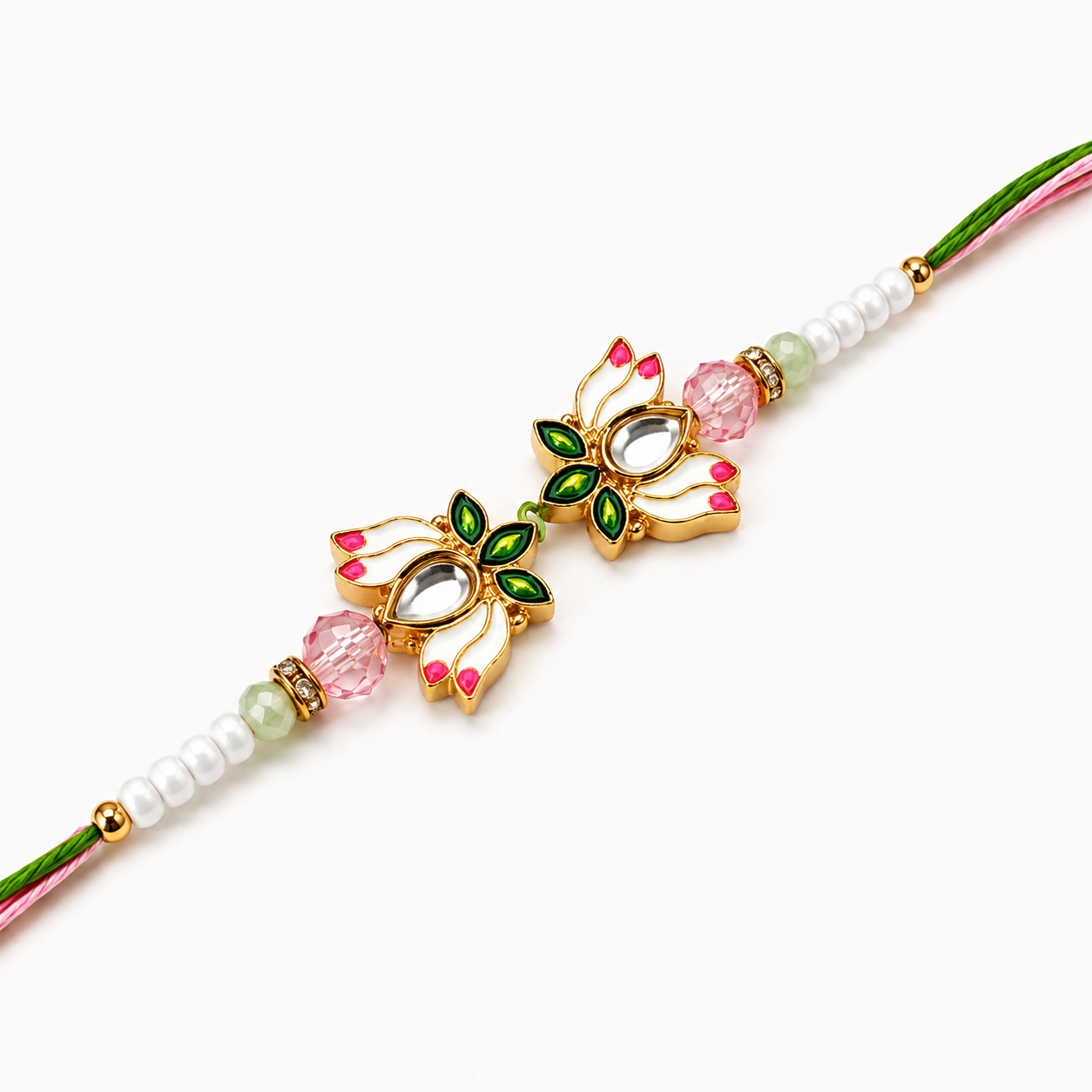
Close-up view of Rudhraksha rakhi set.                                    Close-up view of lotus design rakhi with beads, green & pink threads

Another traditional-inspired choice is the Lotus Design Rakhi with Kundan Stone & Thread. The lotus motif gives the Rakhi a familiar Indian aesthetic, while the decorative detailing adds a more festive appearance.

Traditional does not necessarily mean plain. A Rakhi can retain its cultural identity while incorporating decorative details that make it feel special for the occasion.

2. Spiritual & Symbolic Rakhi Designs

For many families, a Rakhi is tied with prayers and wishes for a brother's happiness and well-being. It is therefore natural that Indian spiritual and symbolic motifs have become an important part of Rakhi design.

The Adoura Gifts Rakhi Store includes designs inspired by Ganesha, Krishna, the flute, Rudraksha, peacock imagery and other familiar motifs.

Ganesha-Inspired Rakhi

Ganesha-inspired Rakhi designs can be a meaningful choice for brothers who appreciate traditional and devotional motifs.

Lord Ganesha is widely associated with wisdom, auspicious beginnings and the removal of obstacles. A Ganesha Rakhi therefore carries significance beyond its decorative appearance.

It can suit a brother who appreciates spiritual symbolism as well as families who prefer Raksha Bandhan Rakhis that retain a recognisable connection to Indian religious and cultural traditions.

Closer view of Ganesha rakhi set.Krishna face rakhi set closeup view       Peacock style rakhi with yellow, pink and green beads.

Krishna-Inspired Rakhi Designs

Krishna-themed Rakhis offer another distinctive spiritual style.

The collection includes a Krishna Face Rakhi as well as a Krishna Flute Rakhi Set, incorporating imagery closely associated with Lord Krishna.

The flute is one of Krishna's most recognisable symbols and gives the Rakhi a traditional identity without requiring an overly elaborate design. A Krishna face motif creates a more prominent devotional centrepiece.

There is also a Handmade Baby Krishna Rakhi Set, offering a softer and more playful interpretation of the Krishna theme.

These designs can be particularly meaningful for Krishna devotees or families who enjoy incorporating devotional elements into their Raksha Bandhan celebrations.

Peacock-Inspired Rakhi

Peacock imagery sits comfortably between traditional symbolism and decorative design.

The colours and intricate form of the peacock lend themselves naturally to festive accessories, while the peacock feather also has a strong association with Lord Krishna.

The collection includes a Peacock Design Rakhi, while the Peacock Feather Rakhi for Bhaiya and Bhabhi carries the motif into a coordinated couple's set.

A peacock-inspired Rakhi can therefore work well for someone who wants a traditional Indian design with more visual detail than a simple thread Rakhi.

3. Designer Rakhi for the Style-Conscious Brother

Not every brother wants a strongly devotional or highly traditional Rakhi. Some may prefer something closer to a decorative wrist accessory.

That is where designer Rakhi styles come in.

Designer Rakhis often make the centrepiece more prominent through decorative stones, beads, floral elements or coordinated colours. They retain the purpose of a Rakhi while offering a more contemporary appearance.

The Designer Flower Rakhi for Brother with Stone & Pearl is one example. Its floral centre, stones and pearl-style detailing make it more ornamental than a simple thread Rakhi.

An I Love Bro Rakhi takes a completely different approach. Instead of relying on traditional symbolism, it expresses the sibling relationship directly and may appeal to someone who prefers a casual, contemporary style.

When choosing a designer Rakhi, think about what your brother normally wears. Someone who prefers understated watches and accessories may appreciate a simpler design, while a brother comfortable with statement pieces may enjoy stronger colours and more decorative detailing.

Matching the design to the wearer often makes the choice much more thoughtful.

4. Fun & Colourful Rakhi Designs for Kids

Choosing Rakhi for a younger brother involves a slightly different approach.

Children may not pay much attention to whether a Rakhi follows a particular design tradition. They are much more likely to notice its colour, character, shape or playful centrepiece.

That makes kids' Rakhi designs a fun way to involve younger brothers in the celebration.

The Adoura Gifts collection includes an M & M Theme Rakhi, a Labubu Rakhi with Beads and a Jeep Rakhi among its child-friendly designs.

Assorted designs of M & M theme rakhis.Baby feet rakhi in grey, blue & pink for raksha bandhan.Side view of jeep rakhi.

A Jeep Rakhi, for example, could appeal to a younger brother fascinated by cars and vehicles. Character-inspired Rakhis may be more exciting for children who respond to colourful and playful designs.

There is also a Cute Baby Feet Rakhi with Beads, offering another light-hearted option for younger members of the family.

Age is worth considering when choosing kids' Rakhi. Younger children may enjoy colourful and instantly recognisable designs, while older boys may prefer something less childlike and closer to a simple contemporary Rakhi.

5. Bhaiya-Bhabhi Rakhi & Lumba Sets

In many families, Raksha Bandhan celebrations also include a married brother's wife.

This is where Bhaiya-Bhabhi Rakhi sets and Lumba Rakhi designs come in. Instead of choosing only a Rakhi for your brother, a coordinated set includes a complementary piece for your sister-in-law.

The Adoura Gifts collection includes several variations, such as the Lotus Bhaiya Bhabhi Rakhi & Lumba Set, Infinity Rakhi Set with Butterfly Design, Om Rakhi & Jhumka Lumba Set and Handcrafted Rakhi Lumba Set for Bhaiya & Bhabhi.

Om rakhi and Jhumka lumba set in red and gold thread.Circle peacock design bhaiya bhabhi rakhi front view.Leaf design rakhi lumba set closeup view.

These designs also demonstrate how traditional and contemporary styles can coexist within the same category.

A lotus-themed set retains a traditional visual character. An Om motif adds a spiritual element, while butterfly and infinity designs have a more contemporary feel.

There is also a Handcrafted Peacock Feather Rakhi for Bhaiya and Bhabhi, bringing the peacock motif into the couple-set tradition.

If your brother is married and your family observes the Lumba tradition, choosing a coordinated set is a thoughtful way to include both your brother and sister-in-law in the celebration.

How to Choose the Right Rakhi for Your Brother

With so many Rakhi designs for brothers available, the easiest way to narrow the options is to start with the person rather than the product.

Consider:

Choosing a rakhi that reflects your brother's personality, interests or beliefs can make the gesture feel more personal.

Finding Rakhi in Singapore

For Indians living in Singapore, being able to shop for Rakhi locally can make planning for Raksha Bandhan more convenient.

Shopping online also makes it easier to compare different Rakhi designs in Singapore before deciding — whether you are looking for a traditional Rakhi, spiritual motif, kids' Rakhi, contemporary design or Bhaiya-Bhabhi set.

The Adoura Gifts Rakhi Store in Singapore brings these different styles together in its seasonal Rakhi collection, allowing you to browse according to the person you are buying for.

If you are planning to buy Rakhi online in Singapore, browsing in advance also gives you more opportunity to compare styles and choose something meaningful rather than leaving the decision until the last moment.

Choosing a Rakhi That Feels Personal

Rakhi designs may have evolved from simple sacred threads into traditional, spiritual, contemporary and playful creations, but the sentiment behind tying one remains remarkably consistent.

A Rakhi is ultimately about the relationship it represents.

Your brother may appreciate the traditional character of a Rudraksha Rakhi, the symbolism of Ganesha or Krishna, the detail of a designer floral Rakhi or simply the fun of receiving a playful design chosen especially for him.

And for a married brother, a Bhaiya-Bhabhi and Lumba set can extend that gesture to include your sister-in-law too.

The right Rakhi does not have to be the biggest or most elaborate. It simply needs to feel right for the person whose wrist you are tying it on.

Explore the Rakhi collection at Adoura Gifts to discover traditional, spiritual, designer, kids' and Bhaiya-Bhabhi Rakhi designs available in Singapore.

Frequently Asked Questions

What type of Rakhi should I choose for my brother?

Consider your brother's age, personality, interests and usual style. Traditional or spiritual Rakhis may suit someone who appreciates cultural motifs, while designer Rakhis work well for brothers who prefer decorative styles. For younger brothers, colourful or character-inspired Rakhis can make the occasion more enjoyable.

Where can I buy Rakhi in Singapore?

You can buy Rakhi from Indian festive retailers and online stores serving Singapore. Adoura Gifts has a seasonal Rakhi collection featuring traditional, spiritual, designer, kids' and Bhaiya-Bhabhi Rakhi designs that can be browsed online.

What are some popular Rakhi designs for kids?

Character-inspired Rakhis, colourful motifs, vehicles and other playful designs are good options for younger brothers. Consider the child's age and interests when choosing rather than simply selecting a smaller version of an adult Rakhi.

What is a Bhaiya-Bhabhi Rakhi?

A Bhaiya-Bhabhi Rakhi is a coordinated Raksha Bandhan set for a brother and sister-in-law. The brother wears the Rakhi, while the complementary decorative piece intended for the sister-in-law is commonly known as a Lumba.

How do I choose between traditional and modern Rakhi designs?

Think about what your brother would actually enjoy wearing. Traditional motifs such as Rudraksha, Ganesha, Krishna, Om or lotus can suit someone who appreciates cultural or spiritual symbolism. Floral, contemporary and playful designs may be better suited to someone with a more modern or casual style.